One Device. Limitless Potential.
From managing and signing with private keys through to verifying who you are, it works across a wide range of situations.
Only you, the owner, can approve.
Openloop protects not only your assets on the blockchain but your digital identity itself. Every kind of digital authentication, handled securely by this one device.
Crypto Wallet & Signer
Crypto assets and blockchain signing
At the heart of Openloop sits a secure element certified to EAL6+, a world-class security standard. That chip is used to generate, store and sign with private keys via ECDSA, EdDSA and RSA. Private keys never leave the device.
It supports stablecoins including JPYC, USDC and USDT. As stablecoins become social infrastructure in the years ahead, Openloop is a crypto wallet and signer, developed in Japan, that physically guarantees the final human approval.
Security beyond financial grade
At its core is a secure element certified to EAL6+, a world-class security standard.
Complete defence of your private keys
Everything from generating your most critical asset — the private key — through to processing signatures is completed inside a device isolated from the internet. Leakage to the outside is physically blocked.
It holds the final human approval
In the era ahead, where AI begins to act on its own, the last signature that moves your assets is still made by a human hand. Openloop is the one tool built to support that act of responsibility.
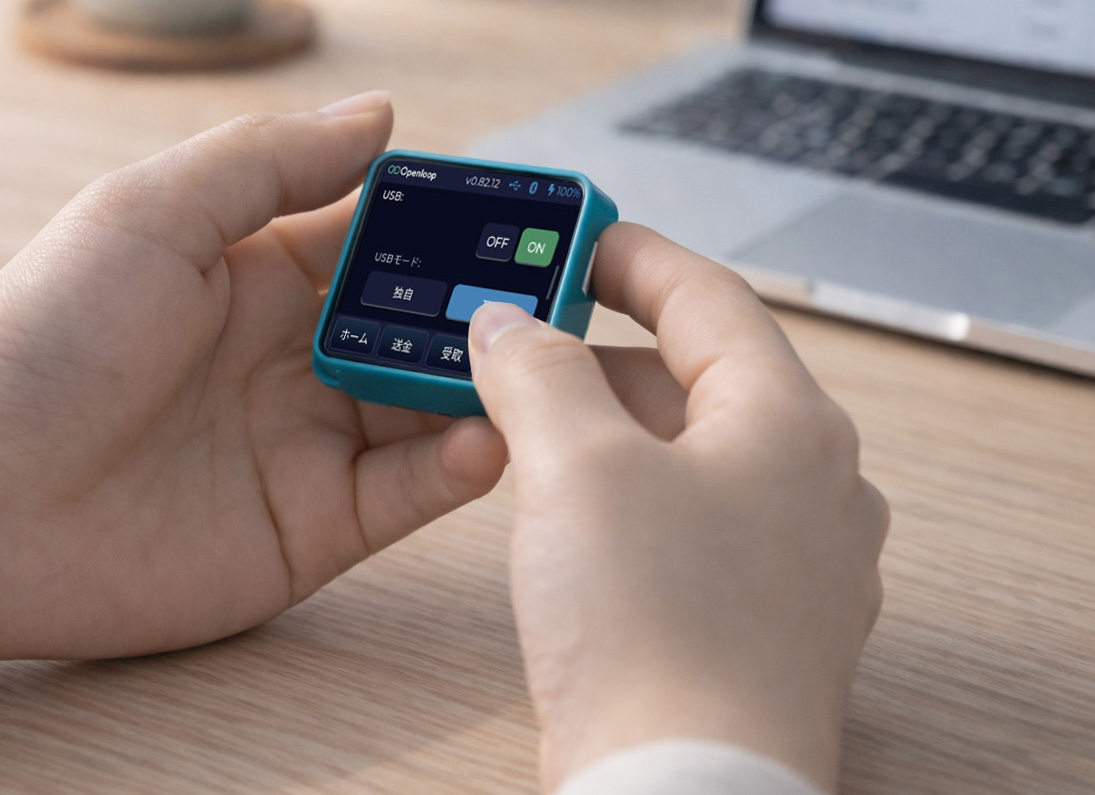
Security Key
Passkeys and PIV
Passkeys work on smartphones and PCs too. But that means entrusting your credentials to a device exposed to viruses and malware. For the accounts you truly want to protect, a dedicated security key that is physically isolated from the internet is essential.
Two authentication experiences Openloop changes
Passkeys (CTAP2)
The name of the service you are signing in to and your ID appear on the screen, and you approve with a touch. Seeing it, confirming it, then touching to authenticate is what stops phishing and man-in-the-middle attacks. Openloop stores up to 100 resident keys and delivers strict access control in which only the person holding that Openloop can sign in. It also slots straight into your existing two-factor authentication.
PIV (personal identity verification)
Openloop implements PIV (Personal Identity Verification) in line with the US government standard NIST SP 800-73. A single device covers the advanced authentication infrastructure that enterprises and public agencies require — corporate VPNs, PC login (Active Directory), digital signatures, SSH access and more. Certificates and cryptographic keys are held in four slots inside Openloop and used as needed. Signing takes place inside the secure element.